The Housing Problem in Spain: Beyond the Debate
Octubre 05, 2026
Real Estate
It’s easier to pick a side than to understand a problem.
Every so often, the debate over housing in Spain follows the same script. A “Mari Carmen” appears—a made-up name, real or symbolic, it doesn’t matter—who is about to be evicted from her apartment. The cameras show up, the activists too, and within hours the narrative is set: there’s a victim, there’s a villain, and the villain is always the same. A real estate fund. A company. The market.
It’s a convenient narrative. And like all convenient narratives, it simplifies things to the point of lying.
The Constitution says what it says—and doesn’t say what many believe
Article 47 of the Spanish Constitution establishes that all Spaniards have the right to decent and adequate housing. That’s true. It’s right there, in black and white.
What it doesn’t say—and this is important—is that anyone has an obligation to provide it to you for free. The right to housing, like the right to education or healthcare, implies that public authorities must promote the necessary conditions to make it effective. In other words, it is the state that must build public housing, regulate the market, and guarantee access. Not the private landlord who bought an apartment with their savings or a bank loan and who has every right in the world to reclaim it when someone stops paying.
Confusing the two is not an innocent mistake. It is a deliberate distortion that shifts to the private sector a responsibility that belongs to the government.
Housing has always been a business
Here’s a historical fact worth remembering whenever someone uses the word “speculation” as if it were a recent invention of late capitalism.
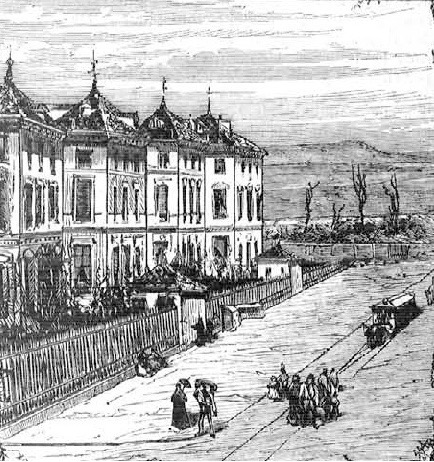
In 1601, the Duke of Lerma—favorite of King Philip III and the most powerful man in Spain—convinced the monarch to move the court from Madrid to Valladolid. Months before the move, he had purchased land in Valladolid at a ridiculously low price. By the time the court arrived, that land was worth a fortune. Five years later, he convinced the king to return to Madrid. By then, he had bought properties in Madrid, taking advantage of the drop in prices caused by the court’s exodus. The very same courtiers who had left were forced to buy them back. The Duke died as the richest man of his time.
Today he is considered the architect of the first real estate windfall in Spanish history. The first of which we have record, it should be noted.
Housing has been an asset, a business, and an instrument of power ever since property has existed. It is not an invention of 21st-century investment funds. It is the history of humanity.
The Real Problem
The housing problem in Spain is real and serious. Prices have risen steadily, access to housing is becoming increasingly difficult for young people, and there are people facing genuinely dire circumstances.
But this problem isn’t solved by demonizing private property or by placing a burden on individual homeowners that isn’t theirs to bear. It’s solved through serious public policy: building public housing, streamlining permitting processes, making public land available, and regulating wisely without scaring away the investment the market needs to function.
As long as public authorities fail to assume that responsibility—and have failed to do so with sufficient determination for decades—the problem will persist. And every so often, Mari Carmen will reappear in the news. And we’ll once again choose sides instead of understanding the problem.
Who is responsible for the processing of your data?
The person responsible will be ALMADA TAVIRA SL, with NIF: B87639076 and registered address located at Calle O’donnell 3, 3º izquierda, CP: 28009 of Madrid.
ALMADA TAVIRA SL has appointed a Data Protection Officer (DPO), to whom you may address any questions regarding the processing of your personal data, by writing to the attention of the Data Protection Officer or by mail to info@almadatavira.com with the subject 'Data Protection Officer'.
What data do we request and for what purpose do we process them?
The data you provide in the form which includes, among others, identification data (such as your name) and contact (email, phone) are necessary for the proper processing of your query, as well as data generated as a result of navigation.
It is the interested party who, through the form, provides us with your contact data for the following purposes:
It is necessary to complete the form those fields marked with (*) otherwise, it will not be possible to carry out the process.
What is the legitimacy of the data processing?
The processing of your request for information allows us to process your data exclusively for this purpose.
To whom do we communicate your data?
We will only communicate your data to those suppliers and entities that you need for the provision of the service concerned or to whom, in anticipation of the legal provisions that apply to you, you are obliged to provide information. International Data Transfers are not foreseen.
How long will your data be kept?
The personal data obtained for the processing and management of the request will be kept for the period of time in which your request for information is being processed and managed. In any case, the interested party is informed that their data may be kept blocked during the periods established by current legislation with respect to the exercise of any claim that we may receive.
If the purpose of the contact is commercial, your data will be kept until such time as you revoke your consent.
What are your rights regarding your data?
The data protection regulations give the interested party the following rights:
In any case, you may exercise any claim you consider appropriate regarding the processing of your data by going to the Spanish Data Protection Agency (www.agpd.es) or by contacting our Data Protection Officer through the contact details indicated above.
COOKIES
For reasons of functionality and operability, browsing this website implies acceptance of the installation of cookies on the devices through which you access the web. However, and in a complementary manner, this Cookies Policy is made available to you, with the purpose of expanding and detailing the information reflected in the informative banner through which the basic information is provided to you after your first access to the web. Thus, the user is informed of what a cookie is, the type of cookies used on this website and how the user can manage them, according to the characteristics of your browser and device (PC, Laptop, Tablet, Smartphone, etc.) used to browse the Website.
Finally, we take this opportunity to remind you that the fact of browsing the page or registering on the same will be considered as a provision of your consent to the installation of cookies reported, unless you have modified your browser settings to the contrary. In any case, the user will be able to modify the configuration of his browser at any time, according to his preferences.
I. WHAT ARE COOKIES?
In order to guarantee your privacy, we inform you that on the Website we use cookies that allow us to improve the usability and navigation through the web page, guarantee access to certain functionalities and, additionally, help us to improve the quality of the page, according to the habits and navigation styles of the users.
A cookie is a file that is downloaded to the terminal from which the user accesses the website (whether PC, smartphone, tablet or other type of device with Internet connection capability) and that allows the owner of the website to store or retrieve certain information on multiple variables such as, for example, the number of times the page has been visited, identify the registered user, guarantee the user's session while browsing the page, remember forms, passwords, language or other particular settings or allow operations to be carried out in a secure and stable manner.
As indicated above, cookies, depending on their type, may collect information about users' browsing habits and, consequently, may affect their privacy. For this reason, we provide the necessary information on the type of cookies used on our website, so that the user has full decision-making capacity in relation to the use of the same and the protection of their privacy.
II. TYPES OF COOKIES.
Below, we provide information on the type of cookies used on the Website:
1. According to their purpose.
Cookies are used for different purposes, as indicated above. According to their purpose, they can be divided into three main groups (although a more exhaustive classification can be made):
- Technical Cookies: These are those that allow the user to navigate through the website and the use of the different options or services that exist in it as, for example, allow playback of third-party multimedia, interface settings, navigation fluidity, use security features during navigation, recognize logins, control access to private areas, etc..
- Analytical Cookies: These are a type of cookies designed and used for monitoring and analyzing user behavior. This type of cookies offer the owner of the page the measurement of activity on the website through aggregate or statistical information. Persistent analytical cookies are used on the Website for this purpose. Specifically, Google Analytics cookies have different expiration dates depending on the information they provide.
- Preference or behavioral cookies: These are a type of cookies designed to facilitate the usability of the website for the user and/or collect information and patterns of the user according to their browsing habits. In this way, these cookies can retain and remember forms and passwords for logins, interface customization, language selection or, where appropriate, remember content preferences, collect the directories consulted by the customer or any other information relating to their browsing habits.
2. According to the period of time they remain active on the terminal equipment
Cookies can have a variable duration of activity, depending on their typology. This feature distinguishes two types:
- Session Cookies: these are a type of cookies designed to collect and store data while the user accesses the website. As their own name indicates, these cookies are stored in your terminal until the end of the user's browsing session.
- Persistent cookies: They are a type of cookies in which the data remain stored in the terminal, even after the end of user navigation, for a period defined by the person responsible for the cookie, which can range from and can range from a few minutes to several years.
3. Depending on the entity owning the cookies
Depending on who is the entity that manages the domain from which cookies are sent and treat the data obtained, we can distinguish:
- Own Cookies: These are those that are sent to the user's terminal equipment from the website itself and are managed by us as owners of this website.
- Third-party cookies: These are those that are sent to the user's terminal equipment from a computer or domain that is not managed by the editor, but by another entity. On our website there are cookies sent from third party domains. Some cookies used on the Web are:
- Google Analytics analytics service offered by Google, Inc. for obtaining information on how the website in question is used for the sole purpose of providing information on the activity of the website. In no case will the user's IP be used by these companies, or by any of the other services they may provide. For more information about Google Analytics you can consult Google's Privacy Center.
o Adwords, servicio también ofrecido por Google, Inc., permite llevar a cabo la medición de nuestras campañas publicitarias y desarrollar acciones de remarketing.
o Facebook allows us to measure our advertising campaigns and develop remarketing actions.
Here you can see how Google uses the information from websites or applications that use its services: https://policies.google.com/technologies/partner-sites, and here how to manage the data collected by Google: https://policies.google.com/privacy.
Here you can consult how to manage the data collected by Facebook: https://www.facebook.com/privacy/policy/.
III. ADDITIONAL INFORMATION AND COOKIE SETTINGS PER BROWSER
In addition, we provide informative links of interest regarding the cookies of some of the main browsers and online content providers. We warn you that these links may be subject to modification by their owners and the same may be obsolete at the time of consultation:
- Internet Explorer™:
Versión 5: http://support.microsoft.com/kb/196955/es
Versión 6: http://support.microsoft.com/kb/283185/es
Version 7 and 8: http://windows.microsoft.com/es-ES/windows-vista/Block-or-allow-cookies
Version 9 and 10: https://support.microsoft.com/es-es/help/17442/windows-internet-explorer-delete-manage-cookies
- Safari™: http://support.apple.com/kb/PH5042?viewlocale=es_ES
- Google: https://support.google.com/chrome/answer/95647?hl=es&hlrm=en
- Firefox™: http://support.mozilla.org/es/kb/cookies-informacion-que-los-sitios-web-guardan-en-?redirectlocale=en-US&redirectslug=Cookies
- Opera™: http://help.opera.com/Windows/11.50/es-ES/cookies.html
- Android: http://support.google.com/android/?hl=es
- Windows Phone: http://www.windowsphone.com/es-ES/how-to/wp7/web/changing-privacy-and-other-browser-settings
Utilizaremos Cookies propias y de terceros para fines analíticos y para mandarte publicidad personalizada en base a un perfil elaborado a partir de tus hábitos de navegación (por ejemplo, páginas visitadas). Clic aquí para más información.
Puedes aceptar todas las cookies haciendo click en el botón “Aceptar”, o configurarlas haciendo clic aquí
El objetivo de esta política es informar a los interesados acerca de las cookies que emplea esta página web de conformidad con lo establecido en la Ley 34/2002, de 11 de julio, de Servicios de la Sociedad de la Información y de Comercio Electrónico, y el Reglamento (UE) 2016/679 del Parlamento Europeo y del Consejo de 27 de abril de 2016.
1. USO DE COOKIES. ¿QUÉ SON LAS COOKIES?
Las cookies son ficheros que se descargan en su Ordenador, Smartphone o Tablet al acceder a determinadas páginas web. La utilización de cookies, ofrece numerosas ventajas en la prestación de servicios de la Sociedad de la Información, puesto que, entre otras: (a) facilita la navegación del usuario en el Sitio Web; (b) facilita al usuario el acceso a los diferentes servicios que ofrece el Sitio Web; (c) evita al usuario volver a configurar características generales predefinidas cada vez que accede al Sitio Web; (d) favorece la mejora del funcionamiento y de los servicios prestados a través del Sitio Web, tras el correspondiente análisis de la información obtenida a través de las cookies instaladas; (e) permiten a un Sitio Web, entre otras cosas, almacenar y recuperar información sobre los hábitos de navegación de un usuario o de su equipo y, dependiendo de la información que contengan y de la forma en que utilice su equipo, pueden utilizarse para reconocer al usuario.
La mayoría de los navegadores aceptan como estándar a las cookies y, con independencia de las mismas, permiten o impiden en los ajustes de seguridad las cookies temporales o memorizadas.
Ten en cuenta que para poder utilizar y contar con una mejor experiencia de navegación, es necesario que tengas habilitadas las cookies, especialmente aquellas de carácter técnico que resultan necesarias para que pueda identificarte como usuario registrado cada vez que accedas a la presente web.
En caso de no querer recibir cookies, por favor, configure su navegador de internet, para que las borre del disco duro de su ordenador, las bloquee o le avise en su caso de instalación de las mismas.
2. ¿QUÉ TIPOS DE COOKIES UTILIZA ESTA PÁGINA WEB?
Cookies utilizadas en este sitio web.
Siguiendo las directrices de la Agencia Española de Protección de Datos, procedemos a detallar el uso de las cookies que esta página web emplea, con el fin de proporcionarle la máxima información posible.
Cookies Propias:
Son aquellas que se envían al equipo terminal del usuario desde un equipo o dominio gestionado por el propio editor y desde el que se presta el servicio solicitado por el usuario.
A continuación la lista de las que utilizamos:
| Nombre | Tipo | Proveedor | Finalidad | Duración |
| TestCookie | Técnica | almadatavira.com | Almacena si se aceptaron los términos y condiciones de la web. | 1 año |
Cookies de Terceros:
Son aquellas que se envían al equipo terminal del usuario desde un equipo o dominio que no es gestionado por el editor, sino por otra entidad que trata los datos obtenidos través de las cookies.
La mayor parte de cookies de terceros que usamos son de las empresas GOOGLE y FACEBOOK (META).
Aquí puede consultar cómo utiliza Google la información de sitios web o aplicaciones que utilizan sus servicios: https://policies.google.com/technologies/partner-sites, y aquí cómo gestionar los datos recogidos por Google: https://policies.google.com/privacy.
Aquí puede consultar cómo gestionar los datos que recoge Facebook: https://www.facebook.com/privacy/policy/.
A continuación la lista de las que utilizamos:
| Nombre | Tipo | Proveedor | Finalidad | Duración |
| __Secure-3PSIDCC, __Secure-3PSID, __Secure-3PAPISID | Publicidad | Se utiliza para entregar anuncios personalizados. | Variable. __Secure-3PSIDCC: 1 año. __Secure-3PSID y __Secure-3PAPISID: 2 años. | |
| SID | Publicidad | Mide el rendimiento de los anuncios y proporciona recomendaciones. | 2 años | |
| SIDCC, 1P_JAR, NID | Análisis y medición | Recoge estadísticas anónimas de visitas y uso, como la duración, origen y destino y duración de las sesiones de navegación. Se usa para limitar el porcentaje de solicitudes. | Variable. SIDCC: 1 año. 1P_JAR: 1 mes. NID: 6 meses. | |
| SSID | Publicidad | Recoger información para el buscador de Google incluido en la web (Google CSE). | 2 años | |
| APISID, SAPISID, HSID | Publicidad | Mide el rendimiento de los anuncios y proporciona recomendaciones. | 2 años | |
| ANID | Publicidad | Esta cookie se utiliza para manejar perfiles basados en el interés del usuario y así poder mostrarles anuncios personalizados. | 1 año | |
| CONSENT | Publicidad | Se utiliza para manejar perfiles basados en el interés del usuario y así poder mostrarles anuncios personalizados. | 18 años | |
| __UTMA, __UTMB, __UTMC, _UTMT y __UTMZ | Análisis y medición | Estas cookies de Google Analytics generan un ID de usuario anónimo, que es el que se utiliza para hacer recuento de cuantas veces visita el sitio un usuario. También registra cuando fue la primera y la última vez que visitó la web. | Variable. UTMA: 2 años. UTMB: A los 30 minutos. UTMC: Al finalizar la sesión de navegación. UTMT: A los 10 minutos. UTMZ: 6 meses. | |
| _ga | Análisis y medición | Es una cookie de análisis de Google Analytics que sirve para almacenar el código de identificación del usuario, aunque el nombre de la cookie, el dominio y el tiempo de expiración pueden ser personalizados. | 2 años. | |
| _gat_gtag_UA_ | Análisis y medición | Esta cookie de Google Analytics es de análisis y sirve para medir como los usuarios interactúan con nuestra página web. | Hasta el fin de la sesión | |
| _gid | Análisis y medición | Es una cookie de análisis de Google Analytics que sirve para dar un código de identificación diferente a cada página e indicar la fecha. | 1 día | |
| _gat | Análisis y medición | Se usa para limitar el porcentaje de solicitudes. Si se ha implementado Google Analytics mediante Google Tag Manager, esta cookie se llamará _dc_gtm_ "property-id". | 1 minuto. | |
| IDE | Análisis y medición | Utilizada por Google DoubleClick para registrar e informar sobre las acciones del usuario en el sitio web tras visualizar o hacer clic en uno de los anuncios del anunciante con el propósito de medir la eficacia de un anuncio y presentar anuncios específicos para el usuario. | 1 año. | |
| datr, fr | Análisis y medición | Si un usuario ha iniciado sesión en Facebook, Facebook puede colocar cookies en su equipo a través del sitio. Estos cambios son necesarios para utilizar la funcionalidad como en los mensajes y la actualización de su estado. | Variable. datr: 1 año. fr: 3 meses. | |
| _fbp | Análisis y medición | Cookie de Facebook utilizadas para recoger estadísticas sobre las visitas al sitio y el rendimiento de las campañas publicitarias | 3 meses. | |
| PREF | Análisis y medición | Youtube | Es una cookie que almacena las preferencias de visualización y de búsqueda de los videos de youtube: idioma preferido, filtro safe-search, etc. | 2 años. |
| YSC | Análisis y medición | Youtube | Registra una identificación única para mantener estadísticas de qué vídeos de YouTube ha visto el usuario. | Hasta el fin de la sesión |
| VISITOR_INFO1_LIVE | Análisis y medición | Youtube | Se trata de una cookie que permite realizar el seguimiento de los videos visitados incrustados en esta web. | 6 meses. |
ALMADA TAVIRA SL Uno se hace responsable, en ningún caso ni del contenido ni de la veracidad de las políticas y/o condiciones de uso y privacidad de los terceros, incluidos, a través de los enlaces, en esta política.
3. CONSENTIMIENTO
Cuando el usuario accede a cualquier página de la web, verá un aviso donde se indica que la página web de ALMADA TAVIRA SL utiliza cookies, pudiendo el usuario aceptar o rechazar el uso de las mismas a través de la configuración de su navegador. Al hacer click en aceptar, usted acepta el uso de nuestras cookies y en su caso las de los terceros. El panel de configuración/privacidad le permite la posibilidad de aceptarlas por tipología.
4. CÓMO BLOQUEAR REVOCAR O ELIMINAR LAS COOKIES INSTALADAS
Puede usted permitir, bloquear, revocar o eliminar las cookies instaladas en su equipo mediante la configuración de las opciones de su navegador. Puede encontrar información sobre cómo hacerlo, en relación con los navegadores más comunes en los links que se incluyen a continuación:
Explorer: https://support.microsoft.com/es-es/kb/278835
Microsoft Edge: https://privacy.microsoft.com/es-es/windows-10-microsoft-edge-and-privacy
Firefox: http://support.mozilla.org/es/kb/Borrar%20cookies
Safari: http://support.apple.com/kb/ph5042.
Opera: https://help.opera.com/en/latest/web-preferences/#cookies
Le informamos, no obstante, de la posibilidad de que la desactivación de alguna cookie impida o dificulte la navegación o la prestación de los servicios ofrecidos en la página web.
5. DESTINATARIOS DE LA INFORMACIÓN
Tendrán acceso a la información obtenida a través de las cookies del sitio web las empresas colaboradoras detalladas en el Panel de Configuración, donde podrás asimismo consultar las finalidades con las que la utilizan y sus respectivas políticas de privacidad. Asimismo, te informamos de que algunos de nuestros proveedores así como empresas colaboradoras pueden realizar transferencias a terceros países. Puedes informarte de las transferencias a terceros países que, en su caso, realizan en sus correspondientes políticas de privacidad, accesibles a través de los enlaces facilitados en el Panel de Configuración
Si tiene dudas acerca de esta política de cookies, puede contactar con ALMADA TAVIRA SL a través del siguiente correo electrónico: info@almadatavira.com
Última revisión: 28/10/2020